




-
3

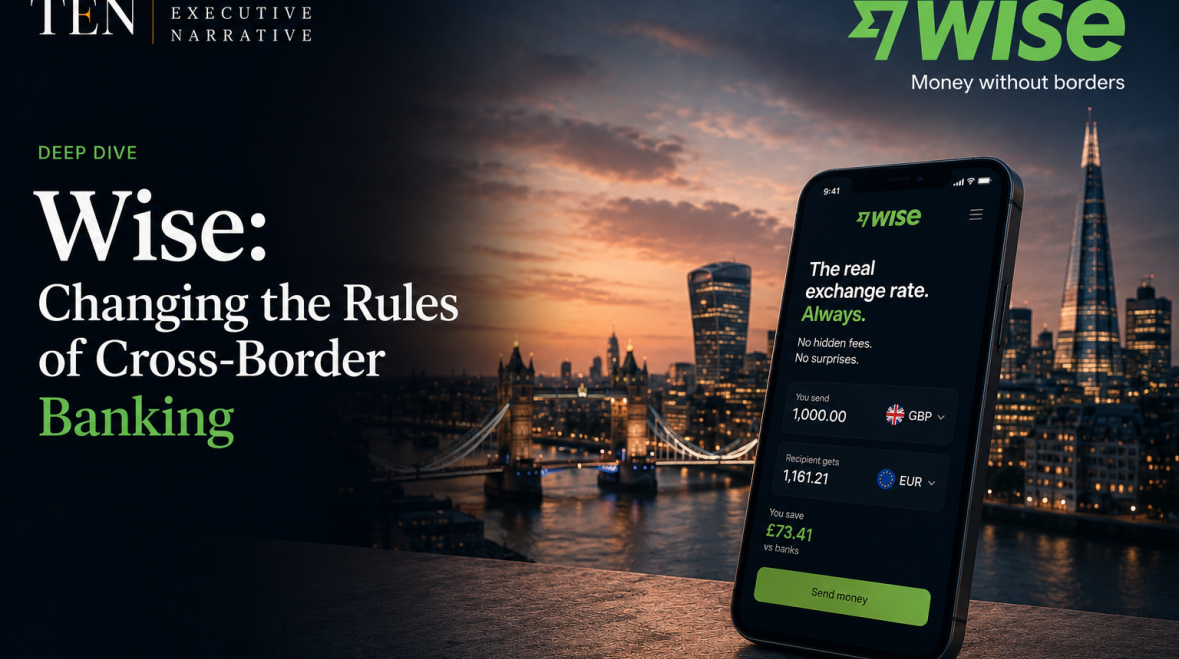
Traditional banks made billions on cross-border payments through hidden exchange rate markups and obscure transaction fees. Wise disrupted international wire transfers by committing to radical fee transparency and mid-market exchange rates. Today, its core competitive moat is an unmatchable cost structure powered by direct local clearing network connections.
The Strategic Challenge
Cross-border banking was historically slow, opaque, and wildly expensive for consumers and businesses. Legacy banks masked high costs inside inflated FX spreads while routing funds through complex correspondent banking chains. The core challenge was building a low-cost, peer-to-peer settlement infrastructure that could bypass SWIFT networks without compromising regulatory compliance.
The Strategic Insight
Wise recognized that price transparency could be weaponized as a customer acquisition engine. Instead of taking high FX margins, the company charged a minimal, upfront service fee and converted money at the real mid-market rate. Treating transparency as a trust-building mechanism turned cross-border transfers from an opaque banking monopoly into a high-volume utility.
The Competitive Mechanism
Wise's global growth operates through a self-reinforcing cost-advantage flywheel:
• Radical price transparency drives high word-of-mouth adoption, lowering Customer Acquisition Cost (CAC) to near zero.
• Surging transfer volume allows Wise to negotiate direct integration with local payment systems globally.
• Lower payment routing costs are passed directly back to consumers, widening the price gap against traditional banks.
Operating Model
Wise operates a localized matrix of domestic bank accounts across 160+ countries, bypassing traditional international wire corridors. Money rarely crosses borders physically; instead, local deposits in one country match local payouts in another. This proprietary infrastructure drastically reduces transaction settlement times and eliminates intermediary bank fees.
Strategic Trade-offs
Choosing full fee transparency forced Wise to sacrifice the massive upfront FX margins enjoyed by legacy banks. The company deliberately rejected lucrative high-margin wealth and lending products to stay focused on low-cost international transfers. This intentional restraint preserved brand trust and protected its ultra-lean operational cost model.
Why Competitors Struggle
Traditional banks cannot match Wise's pricing without destroying their lucrative legacy FX revenue streams—a classic innovator's dilemma. Meanwhile, competing FinTechs lack Wise's deep direct integrations into global domestic clearing networks. Replicating Wise's global infrastructure requires years of regulatory licensing and bank partnership negotiations.
Executive Lessons
Unbeatable enterprise moats can be forged by exposing hidden industry costs and sharing scale efficiency with customers. Leaders must ask:
• Are we hiding margins inside complex pricing or building long-term trust through radical fee clarity?
• Does our operational architecture lower transaction costs as our overall volume scales?
TEN Perspective
Wise proves that transparency is not just an ethical posture, but a devastating competitive weapon against legacy monopolies. By bypassing SWIFT and passing cost savings directly back to users, the enterprise redefined global money movement. Its lasting achievement is demonstrating that in financial services, true scale belongs to the platform that makes pricing completely transparent.
Share:
Weekly trending

Stay Informed with Global Headlines
16 Jul, 2025
- 6 mins read

The Rise of Mindful Living in a Digital World
16 Jul, 2025
- 6 mins read

The Quiet Power of Present Living
16 Jul, 2025
- 6 mins read

Minimalism in Design: Why Less is Still More
16 Jul, 2025
- 6 mins read






Recommended for you
Breaking Down the Elements of a Masterpiece Painting
The Revival of Classical Art in a Digital Age
Must-See Art Exhibitions Around the World This Year
The Revival of Classical Art in a Digital Age