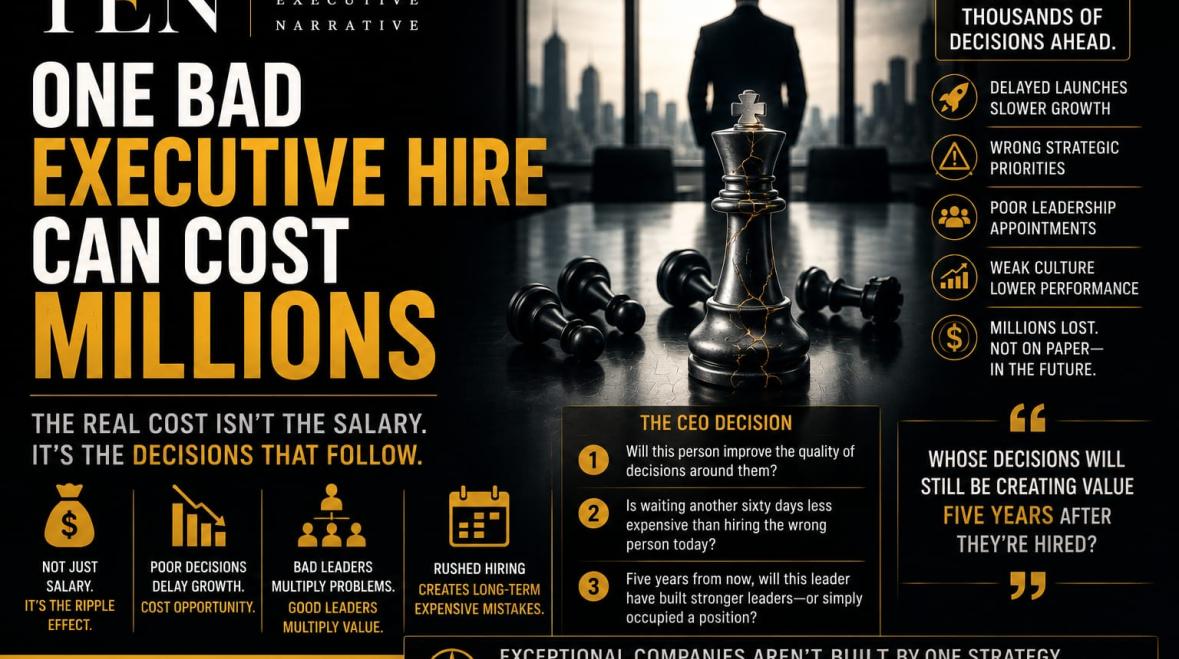
The real cost isn't the salary. It's the decisions that follow.
Every CEO has made a hiring decision they later regretted.
At first, nothing seems wrong. The executive has an impressive résumé, communicates with confidence, and quickly earns the trust of the organisation. The appointment looks like another smart leadership decision.
The real cost rarely appears in the first month.It appears one decision at a time—a delayed product launch, the wrong strategic priority, a poor leadership appointment, or a culture that slowly loses momentum. Months later, the company is solving problems that never should have existed. The executive wasn't simply another employee. They became a multiplier. That is why executive hiring is one of the highest-leverage decisions a board will ever make.
The Boardroom Moment
The search for a new Chief Operating Officer has entered its fourth month. Pressure is building. Business leaders want faster execution, investors expect progress, and leaving the role vacant feels increasingly expensive. The search committee finally presents a strong candidate with the experience, credibility, and track record everyone has been waiting for.
Just before the vote, one director asks a simple question.
"Are we hiring because we've found the right leader—or because we've become uncomfortable waiting?"
The room falls silent.In that moment, the discussion changes. The biggest risk is no longer an empty position. It's allowing urgency to replace judgment.
Why Speed Can Become Expensive
Modern business celebrates speed. Faster growth. Faster decisions. Faster execution.
That mindset often influences executive hiring. A vacant leadership position feels like lost momentum, so organisations rush to fill it. But executive hiring doesn't behave like operational execution.Waiting another six weeks for the right leader may feel expensive. Spending the next six years correcting the wrong decision is almost always worse.
TEN Framework: Leadership Compounding
Most organisations evaluate executive hires through experience, salary, and past achievements.
TEN suggests a different perspective.
Every executive creates Leadership Compounding. Leadership Compounding is the long-term value—or damage—created by the thousands of decisions an executive makes after joining the company. Great leaders improve hiring, strengthen strategy, develop future leaders, and elevate the quality of decisions around them.
Poor leaders do exactly the opposite.
The salary isn't the investment.
The future decisions are.
The CEO Decision
Before approving the next executive appointment, every leadership team should ask three questions.
Will this person improve the quality of decisions around them?
Is waiting another sixty days less expensive than hiring the wrong person today?
Five years from now, will this leader have built stronger leaders—or simply occupied a position?
Those questions reveal far more than another interview ever will.
TEN Perspective
Businesses often believe executive hiring is about filling an important role.
It isn't.
It's about choosing the people who will shape everyone else's decisions.
Products can be redesigned. Strategies can change. Capital can always be raised again. Leadership is different. Every executive leaves an organisational fingerprint that continues influencing the business long after quarterly results are forgotten.
Perhaps boards have been asking the wrong question.
Not,
"Who can fill this role the fastest?"
But,
"Whose decisions will still be creating value five years after they're hired?"
Exceptional companies are rarely built by one brilliant strategy.They are built through thousands of good decisions made by exceptional leaders.And every one of those decisions begins with one hiring decision.

















Recommended for you
Breaking Down the Elements of a Masterpiece Painting
The Revival of Classical Art in a Digital Age
Must-See Art Exhibitions Around the World This Year
The Revival of Classical Art in a Digital Age