




-
5

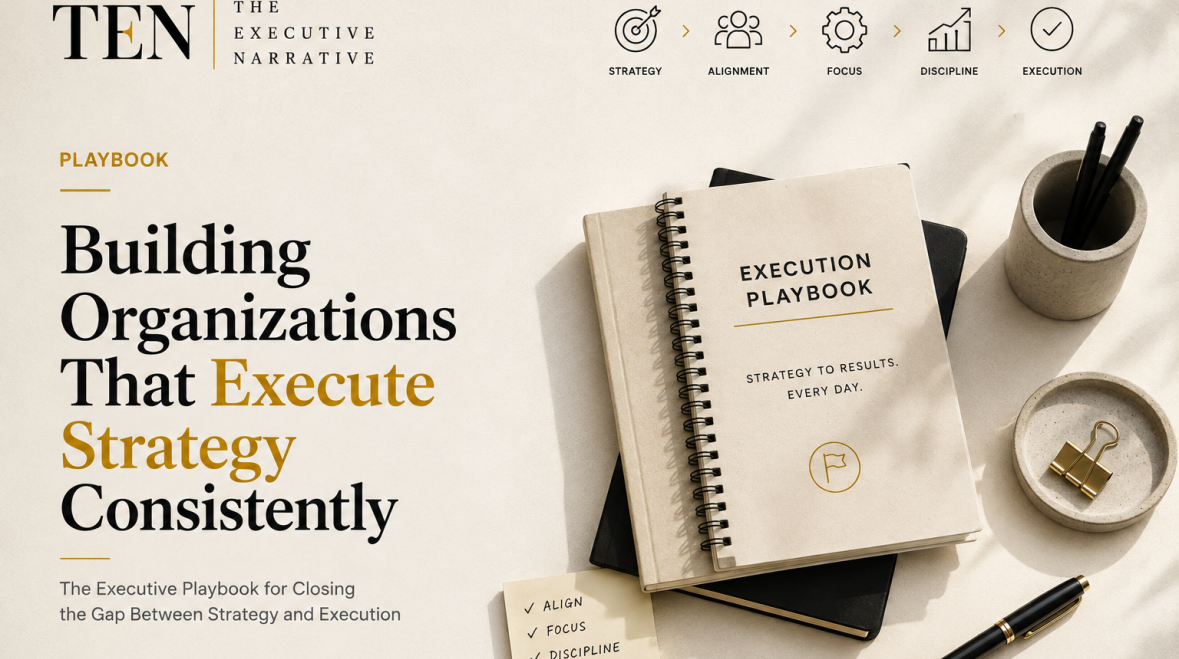
Executive Snapshot
• Objective: Build an operating system that systematically translates strategic intent into daily operational execution.
• Best Fit: Enterprise Organizations, High-Growth Scaling Businesses, Multi-Divisional Operations, PE Portfolio Companies.
• Avoid If: Early-stage startups pivoting weekly, or opportunistic, custom-project businesses.
• Research Base: Synthesizes practices from Amazon, Danaher, Toyota, Apple, and ServiceNow.
• Executive Takeaway: Learn five transferable plays to eliminate execution friction, align daily work with strategic goals, and close the execution gap.
Why This Strategy Exists
Most leadership teams do not fail at strategy formulation—they fail at execution.
Every year, executives spend months crafting strategic plans, analyzing market dynamics, and setting ambitious multi-year goals. Yet, as strategy cascades down management layers, strategic intent suffers progressive dilution. Daily operational fires inevitably displace long-term priorities, and strategic projects end up competing for the same resources.
The execution gap is not a talent issue; it is an operating system flaw.
Without a structured execution framework, organizations rely on heroics, continuous escalation, and pressure. When quarterly targets are missed, leadership often responds by launching new initiatives or replacing executives, leaving the root operational breakdown unaddressed.
Exceptional organizations solve this by treating execution as a repeatable discipline. They align daily work with long-term strategy through structured governance, controllable metrics, and standardized problem-solving.
THE PLAYBOOK
PLAY ONE: Translate Strategy Into Operating Metrics
Objective: Convert strategic priorities into daily, controllable input metrics across all operational levels.
Executive Problem: Strategies are usually articulated in financial outcomes (e.g., revenue, market share). These lagging metrics measure past results, giving no daily guidance to front-line teams. Consequently, leadership only discovers execution failures when it is too late to adjust.
Why It Works: Focusing on leading inputs—controllable, repeatable operational behaviors—allows leadership to manage present performance rather than react to past results.
How Exceptional Organizations Execute It:
• Danaher uses Policy Deployment matrices to cascade 3-to-5-year breakthrough goals into daily visual management boards at the shop-floor level.
• Amazon rejects managing purely by financial outputs, focusing weekly business reviews on controllable operational inputs (e.g., inventory placement, delivery speed).
• Toyota uses Hoshin Kanri to map every team's daily operational targets back to corporate strategic goals.
Implementation: Map every strategic priority to 2–3 controllable leading input metrics. Restructure weekly operational reviews around these input metrics rather than lagging financial results.
Success Indicators:
• 100% of strategic goals map to controllable input metrics.
• Weekly reviews focus on leading inputs over lagging outputs.
• Variances are detected within days, not at quarter-end.
PLAY TWO: Limit Strategic Priorities To Accelerate Velocity
Objective: Focus capital and managerial bandwidth on a strict minority of initiatives to eliminate resource dilution.
Executive Problem: Leadership teams often pursue too many initiatives simultaneously. This fragments capital, engineering capacity, and executive focus. Context-switching creates coordination overhead, causing project timelines to slip.
Why It Works: Execution velocity is inversely proportional to active work-in-progress. Constraining active initiatives concentrates resource density, enabling organizations to reach critical mass faster and complete strategic bets ahead of schedule.
How Exceptional Organizations Execute It:
• Apple maintains a tightly focused product roadmap, explicitly rejecting viable opportunities to focus design and engineering power on a few key bets.
• ServiceNow structures product development around standardized quarterly release themes, concentrating engineering resources on core workflow capability.
• Amazon assigns single-threaded leaders and dedicated teams to individual strategic priorities without competing operational tasks.
Implementation: Cap active enterprise-level initiatives at 3–5. Enforce a strict "one-in, one-out" rule before launching new projects. Audit resource allocation quarterly to redirect talent toward top priorities.
Success Indicators:
• Active enterprise initiatives remain capped at 3–5.
• Strategic project completion cycles drop significantly.
• Key talent is concentrated exclusively on top-tier goals.
PLAY THREE: Embed Governance Inside Daily Workflows
Objective: Integrate strategic oversight directly into daily and weekly operational rhythms rather than relying on periodic status decks.
Executive Problem: Traditional governance relies on monthly or quarterly steering committees. Between these reviews, tactical noise takes over, allowing strategic execution to drift. By the time status reports highlight issues, execution delays have compounded for months.
Why It Works: Short feedback loops expose operational variance almost immediately, allowing leadership to reallocate resources and resolve blockers while the initiative is still on schedule.
How Exceptional Organizations Execute It:
• Toyota enforces daily visual management and Gemba walks, observing front-line operations to identify variances in real time.
• Danaher integrates strategic governance into daily 15-minute standups that trigger immediate problem-solving protocols when metrics deviate.
• ServiceNow uses real-time digital workflow dashboards, giving leadership live visibility into milestones without relying on manual status presentations.
Implementation: Replace monthly narrative decks with a standardized 30-minute weekly review built around live visual dashboards. Focus strictly on metric variance.
Success Indicators:
• Weekly visual reviews replace monthly status presentations.
• Variances are flagged within 24–48 hours.
• Interventions happen dynamically while projects are active.
PLAY FOUR: Standardize Problem-Solving Across Departments
Objective: Establish a single, enterprise-wide problem-solving methodology to permanently resolve execution bottlenecks.
Executive Problem: When execution stalls, departments default to fragmented, localized problem-solving and finger-pointing. Surface-level workarounds are implemented, causing systemic process failures to recur continuously across handoffs.
Why It Works: A universal problem-solving language shifts company culture from assigning personal blame to fixing root process gaps, building long-term organizational capability.
How Exceptional Organizations Execute It:
• Danaher mandates the 8-step Problem Solving Process (PSP) across all business units before process changes or budget increases are approved.
• Toyota uses A3 thinking and the "5 Whys" methodology to address structural root causes rather than patching surface symptoms.
• Amazon requires six-page narrative post-mortems for operational failures to force rigorous root-cause reasoning over slide presentations.
Implementation: Adopt a standardized root-cause methodology (e.g., A3 or PSP) enterprise-wide. Require a completed root-cause analysis before granting deadline extensions or extra budget for stalled projects.
Success Indicators:
• All cross-functional bottlenecks use the enterprise problem-solving standard.
• Root causes are permanently resolved rather than repeatedly patched.
• Team discussions pivot from personal blame to process evaluation.
PLAY FIVE: Align Incentives to Strategic Inputs
Objective: Align executive compensation and capital allocation directly to controllable strategic inputs rather than short-term functional targets.
Executive Problem: While leadership preaches long-term strategy, compensation structures often remain tied to legacy functional KPIs or short-term P&L targets. Under pressure, managers naturally optimize for their individual bonuses at the expense of strategic priorities.
Why It Works: Organizations execute what leadership compensates. Linking variable compensation directly to strategic input milestones aligns managerial self-interest with multi-year enterprise goals.
How Exceptional Organizations Execute It:
• Amazon structures executive comp heavily around long-term RSUs with multi-year vesting, aligning incentives with multi-year operational inputs.
• Apple bases executive bonuses on company-wide operational performance rather than isolated division P&Ls, eliminating internal political friction.
• ServiceNow ties executive performance directly to platform adoption and long-term customer workflow outcomes.
Implementation: Reallocate 30–50% of executive variable compensation directly to strategic input milestones. Establish shared cross-functional metrics between collaborating leaders (e.g., Sales, Engineering, Product).
Success Indicators:
• Executive bonuses are explicitly tied to strategic input milestones.
• Cross-functional collaboration replaces divisional P&L silos.
• Capital flows dynamically to teams meeting strategic input targets.
Common Implementation Mistakes
• Treating Strategy Execution as an Event: Hosting high-energy offsites without establishing weekly operational review cadences.
• Managing Lagging Outputs: Focusing solely on financial metrics instead of leading operational inputs.
• Priority Creep: Continuously adding "urgent" projects without retiring older ones, fracturing organizational capacity.
• Tolerating Patchwork Problem-Solving: Allowing departments to use disparate methods, leading to defensive silos during failures.
• Misaligned Incentive Structures: Rewarding legacy functional KPIs while expecting teams to deliver long-term strategic transformation.
Executive Scorecard
Evaluate your leadership team against these 5 diagnostic questions:
1. Input Metrics: Can every department head identify the 2–3 controllable leading inputs driving long-term strategy?
2. Priority Concentration: Is your organization pursuing no more than 3–5 active strategic priorities with a strict "one-in, one-out" policy?
3. Governance Rhythm: Are strategic reviews conducted weekly through visual dashboards rather than monthly status decks?
4. Universal Standard: Does the enterprise use a single root-cause problem-solving methodology when execution misses target?
5. Incentive Alignment: Is 30–50% of executive variable compensation tied directly to cross-functional strategic inputs?
TEN Principle
Exceptional organizations do not achieve execution consistency through superior foresight or higher motivation. They achieve it by building operating systems that make execution predictable, transparent, and continuous.
Strategy establishes direction; operating discipline determines destination. When an enterprise converts strategy into controllable input metrics, caps priorities, embeds real-time governance, standardizes problem-solving, and aligns incentives, the gap between strategy and execution disappears.
Share:
Weekly trending

Stay Informed with Global Headlines
16 Jul, 2025
- 6 mins read

The Rise of Mindful Living in a Digital World
16 Jul, 2025
- 6 mins read

The Quiet Power of Present Living
16 Jul, 2025
- 6 mins read

Minimalism in Design: Why Less is Still More
16 Jul, 2025
- 6 mins read






Recommended for you
Breaking Down the Elements of a Masterpiece Painting
The Revival of Classical Art in a Digital Age
Must-See Art Exhibitions Around the World This Year
The Revival of Classical Art in a Digital Age