
Kitopi: Reengineering the Cloud Kitchen OS
August 06, 2026
- 3 mins read





2026 Copyright @ TEN.
All Rights Reserved
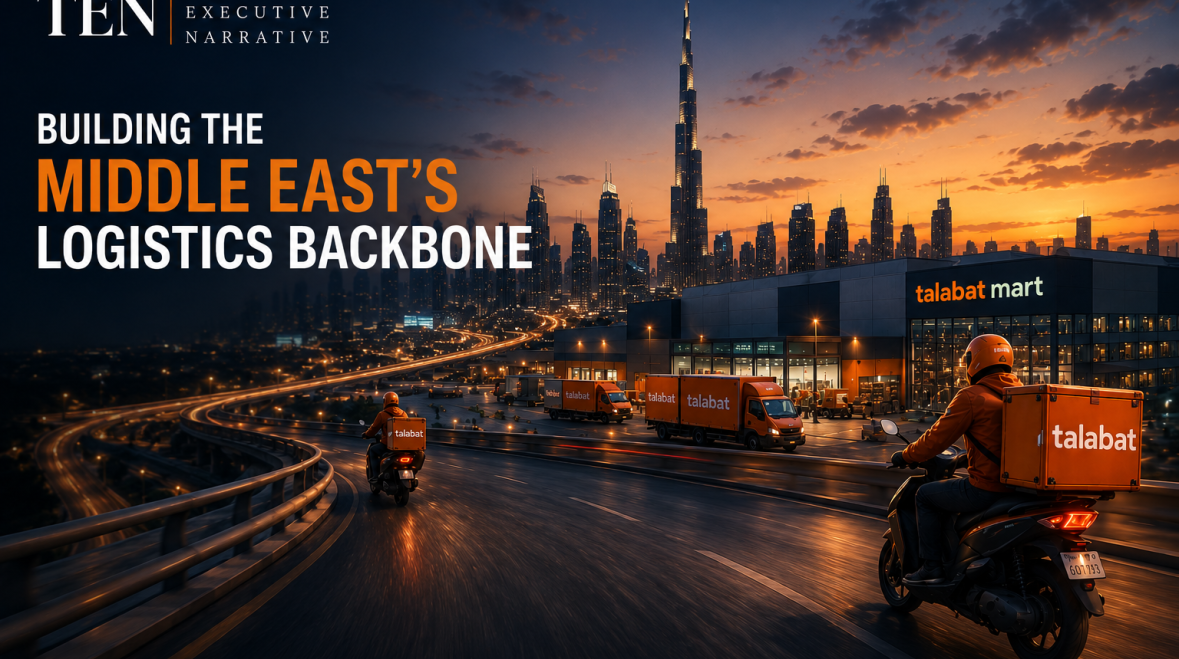
The Middle Eastern delivery industry was traditionally seen
as a simple merchant directory. Talabat redefined this by treating food
delivery as a technology problem, building a data-driven operating system to
optimize urban courier movement. Today, its true moat is the real-time
logistics intelligence coordinating drivers, dark stores, and multi-category
orders.
The Strategic Challenge
Urban delivery in the Middle East faces severe operational
hurdles from extreme heat, dense traffic, and unmapped addresses. Outsourcing
fulfillment to merchants or third-party fleets created severe service
inconsistency. The core bottleneck was fleet coordination—managing driver
positioning, prep times, and demand spikes through a centralized engine.
The Strategic Insight
Talabat recognized that last-mile delivery would become a
software orchestration problem rather than a listing marketplace. By treating
every order as operational data, it continuously refined route optimization,
dispatch accuracy, and dark store positioning. Technology transformed scale
from an operational burden into a self-reinforcing advantage.
The Competitive Mechanism
Talabat's competitive advantage operates through a
reinforcing feedback loop:
• Higher order volumes generate denser courier
coverage across urban zones.
• Greater density enables faster routing,
higher fleet utilization, and lower drop costs.
• Lower fulfillment costs and sub-20-minute
delivery speeds attract more multi-category users.
Operating Model
Talabat operates as an integrated logistics platform rather
than isolated delivery services. Restaurant meals, quick-commerce groceries via
talabat mart, pharmacy items, and retail goods share a single courier fleet and
dispatch layer. This shared infrastructure smooths out demand spikes across
peak meal hours and routine grocery orders.
Strategic Trade-offs
Building proprietary fulfillment technology and dark store
infrastructure required heavy long-term capital allocation. Talabat
deliberately accepted fleet overhead, lease commitments, and inventory carrying
risks instead of remaining an asset-light marketplace. These trade-offs secured
complete operational control and dominant market share.
Why Competitors Struggle
Competitors can easily launch ordering apps and onboard
merchants, but replicating physical fulfillment intelligence is vastly more
difficult. Years of spatial delivery data, dynamic dispatch algorithms, and
dense dark store networks create moats that strengthen with every delivery.
Executive Lessons
Durable advantage comes from orchestrating physical
execution systems rather than expanding software interfaces. Executives must
ask:
• Are we scaling software listings or
improving the physical intelligence behind fulfillment?
• Does order growth increase operational
friction or strengthen our network density?
TEN Perspective
Competitive advantage belongs to platforms that orchestrate complex physical systems at scale. Delivery is no longer defined by simple restaurant ordering, but by technology that makes physical movement predictable. Talabat's achievement is proving that infrastructure becomes most valuable when it learns from every journey.











Recommended for you
Breaking Down the Elements of a Masterpiece Painting
The Revival of Classical Art in a Digital Age
Must-See Art Exhibitions Around the World This Year
The Revival of Classical Art in a Digital Age