
The CEO’s Real Job Is Reducing Uncertainty
August 08, 2026
- 5 mins read






2026 Copyright @ TEN.
All Rights Reserved
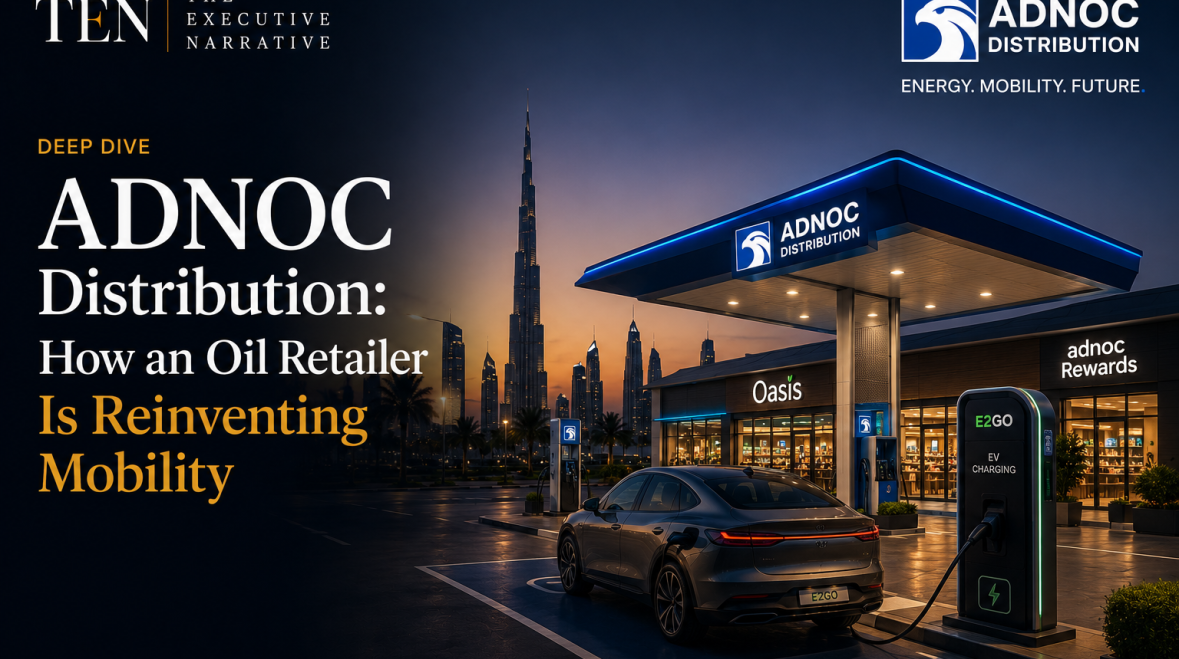
Traditional fuel retailers face structural long-term headwinds from electric vehicle adoption and decarbonization mandates. ADNOC Distribution disrupted the legacy gas station model by transforming service stations into multi-modal mobility hubs and high-margin non-fuel destinations. By integrating EV super-charging infrastructure, premium convenience retail, and digital loyalty, the company turned physical real estate into a resilient, future-proof mobility moat.
The Strategic Challenge
Fuel retail historically operated on thin, volatile margins dictated by global crude prices and regulated domestic fuel caps. As EV adoption accelerates across the GCC, traditional fuel pumps risk becoming stranded, declining assets. The core challenge was modernizing hundreds of physical service stations into high-yield mobility hubs without disrupting existing fuel revenues.
The Strategic Insight
ADNOC Distribution recognized that service stations are prime urban real estate assets with guaranteed foot traffic rather than mere fuel pumps. By integrating fast EV charging, modernized Oasis convenience stores, and automated car care, the company successfully monetized customer dwell time. Treating mobility as a holistic customer experience diversified revenue away from pure fuel reliance.
The Competitive Mechanism
ADNOC Distribution's market leadership operates through a self-reinforcing diversification flywheel:
• Dominant physical station density across the UAE captures high-frequency consumer traffic.
• EV super-charging and premium non-fuel retail offerings increase customer dwell time and basket size.
• High-margin non-fuel profits and ADNOC Rewards data fund continuous network modernization and regional expansion.
Operating Model
ADNOC Distribution operates an integrated mobility network combining fuel, EV charging infrastructure (E2GO), vehicle services, and convenience retail. Powered by smart station automation, predictive AI inventory management, and the ADNOC Rewards digital ecosystem, the model maximizes yield per square meter across its physical real estate footprint.
Strategic Trade-offs
Modernizing a massive legacy network required substantial upfront capital expenditure in EV infrastructure, digital technology, and store redesigns. ADNOC Distribution prioritized long-term station yield over immediate cash retention, accepting temporary site disruptions during upgrades. These deliberate investments secured market leadership as regional EV adoption accelerates.
Why Competitors Struggle
Traditional fuel retailers lack the balance sheet strength, real estate scale, and sovereign backing required to execute large-scale network modernization. Replicating ADNOC Distribution's nationwide EV charging network, premium retail partnerships, and international expansion (Saudi Arabia and Egypt) presents massive capital and regulatory barriers to entry.
Executive Lessons
Sustainable legacy transformation requires viewing physical assets as multi-service ecosystems rather than single-product distribution channels. Leaders must evaluate:
• Are we maximizing yield per square meter across our physical real estate footprint?
• Does our modernization strategy future-proof our business model against structural energy shifts?
TEN Perspective
ADNOC Distribution proves that legacy energy incumbents can proactively lead, rather than fear, the global energy transition. By reinventing service stations as digital mobility and retail destinations, the enterprise built a resilient operational model for the post-oil era. Its lasting achievement is demonstrating that physical network density, when modernized, becomes an unassailable competitive moat.











Recommended for you
Breaking Down the Elements of a Masterpiece Painting
The Revival of Classical Art in a Digital Age
Must-See Art Exhibitions Around the World This Year
The Revival of Classical Art in a Digital Age